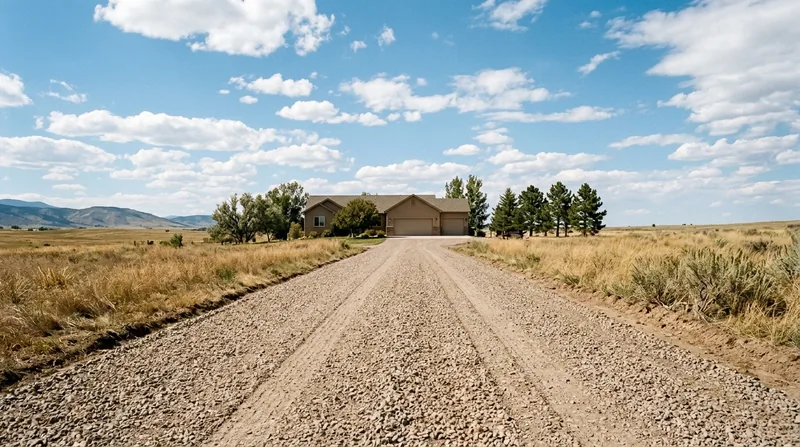




Gravel Driveway Installation & Grading in Denver is not a simple dump-and-smooth operation. Denver sits on expansive clay that heaves and shifts with spring snowmelt and summer drought, and loose stone on top of that moving ground will rut, washboard and sink at the edges without proper base preparation and crown. A gravel drive that sheds water instead of pooling it, that stays compacted through the freeze-thaw cycle, and that doesn't surrender to the clay underneath requires real grading work, not just a blade pass. We prepare the base, set the crown, and compact the surface so your driveway stays usable through Denver's dry summers and the hundred-plus freeze-thaw days that come every winter. Whether you're maintaining a rural property in Douglas County, managing an HOA lane in Littleton, or keeping a working driveway open in the foothills near Golden, the same principles apply: proper drainage and compaction beat cosmetics every time. Call us at (720) 674-7204 for a free estimate, or visit our pricing page to see what gravel work costs in your area.
Why Gravel Driveway Grading Matters in Denver's Climate
Denver's Front Range sits on the weathered remnants of volcanic ash, which has oxidized into expansive clay and bentonite that swells when wet and shrinks as it dries. That ground movement happens twice a year with snowmelt and summer drought, and it happens again with every freeze-thaw cycle. A driveway surface that rests flat on that moving clay will heave, crack and settle unevenly no matter what you lay on top. Proper grading solves this by building a compacted aggregate base thick enough to distribute loads and move water away from the clay, and by crowning the surface so rain and snowmelt drain instead of soaking in.
- We compact the base in layers to create a stable foundation that resists heave and settlement.
- We crown the surface so water sheds to the sides instead of pooling in the middle of your drive.
- We establish proper drainage at the edges so meltwater runs away from the gravel and the clay underneath.
- We use the right stone (typically 3/4-inch crushed granite or similar) that locks together when compacted instead of scattering under tire pressure.
Without this foundation work, your gravel drive becomes a washboard within two seasons, rutted at the wheel tracks and soft at the edges where water concentrates.
Key info: A property in Littleton or Highlands Ranch that skips base preparation will see gravel migration, rutting and edge drop within one or two winters. The same property with a proper crown and compacted base stays solid for five to seven years with routine raking and occasional top-up stone.
How We Install and Grade a Gravel Driveway in Denver
The work starts with a site visit to understand drainage, slope, soil conditions and how much stone and base material the drive will need. We measure the area, identify low spots and existing drainage problems, and calculate tonnage for the base and surface stone. From there, the installation follows a proven sequence that accounts for Denver's clay and the loads a driveway sees.
- We remove existing gravel or debris and grade the subgrade level, setting aside any usable stone.
- We establish proper slope and crown so water drains away from the center line toward the edges.
- We lay and compact the base course (typically 4 to 6 inches of crushed stone or recycled asphalt millings) in lifts to create a stable, load-bearing layer.
- We add and compact the surface stone (usually 2 to 3 inches of 3/4-inch crushed granite or similar) and finish the crown so the drive is ready to use immediately.
The entire job typically takes one day for a standard residential driveway, though larger properties or those requiring significant earthwork may take longer. We verify local permit requirements with your municipality before we start, because some jurisdictions require notice for work that involves grading or drainage changes.
Local example: A 500-square-foot gravel drive in Aurora or Centennial typically needs 10 to 15 tons of base stone and 4 to 6 tons of surface stone. A 1,000-square-foot drive in Arvada or Westminster runs 20 to 30 tons of base and 8 to 12 tons of surface. We calculate exact tonnage on site and include it in your written estimate.
Gravel Driveway Methods and Materials
| Approach | Description | Best for |
|---|---|---|
| Crushed Granite | Angular 3/4-inch stone that locks together when compacted, resists migration, and sheds water readily. | High-traffic residential and rural driveways, HOA lanes, properties where durability and low maintenance are priorities. |
| Recycled Asphalt Millings | Reclaimed asphalt chunks and fines that re-compact and harden over time as binder residue reactivates in warm weather. | Budget-conscious owners, secondary lanes, temporary access roads, or as a base layer under crushed granite. |
| Pea Gravel | Smooth, rounded stone that is attractive but does not lock together and migrates under tire pressure. | Aesthetic driveways with light traffic, decorative top layer over a proper base of crushed stone. |
| Chip Seal or Tar and Chip | Liquid asphalt sprayed over gravel and rolled to bind it, creating a semi-permanent surface that is darker and more stable than loose stone. | Homeowners seeking a step between gravel and full asphalt, or properties where budget allows an upgrade from loose stone. See our tar and chip service page for details. |
Each material has trade-offs in cost, longevity and maintenance. Crushed granite is the most durable and lowest-maintenance choice for Denver's climate. Recycled asphalt millings cost less and work well as a base but require more frequent raking and top-up. Pea gravel looks good but needs raking every few months. Chip seal bridges the gap between gravel and asphalt at a moderate price point.
Gravel Driveway Installation & Grading Cost in Denver: What to Expect
A gravel driveway installation in Denver starts at $950 for a small residential drive with straightforward grading and good existing drainage. Most residential properties fall in the $1,200 to $2,500 range depending on square footage, the condition of the existing subgrade, how much earthwork is needed to establish proper slope, and whether the site requires fill or special drainage solutions. Larger properties, rural lanes and HOA roads are priced on a per-ton basis for materials plus labor.
The main factors that move cost up or down are:
- Square footage of the driveway (100 square feet costs far less than 1,000).
- Existing grade and drainage (a drive that slopes naturally costs less than one requiring significant fill or regrading).
- Material choice (crushed granite costs more per ton than recycled asphalt millings, but lasts longer).
- Access and site conditions (tight urban lots cost more than open rural properties where equipment can operate freely).
- Tonnage of base and surface stone (a typical 500-square-foot drive needs 15 to 20 tons; a 1,000-square-foot drive needs 30 to 40 tons).
We always provide a written estimate that includes exact tonnage, material specifications, labor and the total cost before any work starts. Getting two or three estimates from local contractors is smart practice, because gravel work varies widely based on how contractors approach base preparation and what stone they source. Visit our pricing page for more detail, or call (720) 674-7204 for a free on-site estimate.
Gravel Driveway Installation & Grading Near Me: What Denver Homeowners Should Know When Hiring a Contractor
Choosing the right contractor for gravel work is about more than price. You want someone who understands Denver's expansive clay, who knows how to build a base that won't heave or settle, and who will put the specifications in writing so you know exactly what you're paying for. Here are the key things to verify before you sign:
- Ask for a written estimate that includes square footage, base depth, surface depth, material type, total tonnage and labor cost, so you can compare apples to apples with other quotes.
- Verify that the contractor is fully insured with general liability and workers compensation, and ask to see the certificates before work starts.
- Check that the contractor understands local permits and will help you navigate any requirements your city or county has for grading work, drainage changes or driveway extensions. Denver has specific rules for stormwater and impervious surface; other municipalities differ.
- Confirm whether the contractor will call Colorado 811 for a utility locate before any excavation, because hitting a gas line, water line or buried cable is expensive and dangerous.
- Ask for references from recent work in your neighborhood, and follow up with at least two to understand how the contractor handles cleanup, communication and follow-up.
- If your property is in an HOA, verify architectural standards with your HOA board before you book the work, because some master-planned communities restrict gravel and require asphalt, recycled millings or chip seal instead.
The strongest signal of a trustworthy local contractor is a verifiable local address and local phone number, because the historic fraud in driveway work is the door-to-door crew with out-of-state plates offering to use "leftover material" at a discount. We are based in Denver, we carry local insurance, and we provide written estimates with tonnage and specifications. Call our contact page or (720) 674-7204 to schedule your free estimate.
Gravel Driveway Installation & Grading in Denver: Pricing Guide
| Service | Price | Details |
|---|---|---|
| Small residential gravel drive (300-500 sq ft) | Starting at $950 | Includes base preparation, crown, compaction and crushed granite surface stone for typical Denver clay soil. |
| Medium residential drive (500-1,000 sq ft) | Starting at $1,500 | Grading, base course, surface stone and compaction. Cost rises with square footage and if regrading or fill is needed. |
| Large or rural property (1,000+ sq ft, HOA lane, private road) | On estimate | Quoted per ton of material plus labor. Site visit required to assess drainage, slope, soil and access conditions. |
| Recycled asphalt millings base layer (alternative to crushed stone) | Starting at $800 | Lower cost than virgin crushed granite but requires more frequent maintenance. Works well as base under surface stone. |
| Travel and estimate | Free estimate | No charge for on-site measurement and written quote. Response within 24 hours. Included in Denver and surrounding areas. |
Indicative pricing, the exact cost depends on square footage, finish, and site access. Free personalized estimate within 24h at (720) 674-7204.


