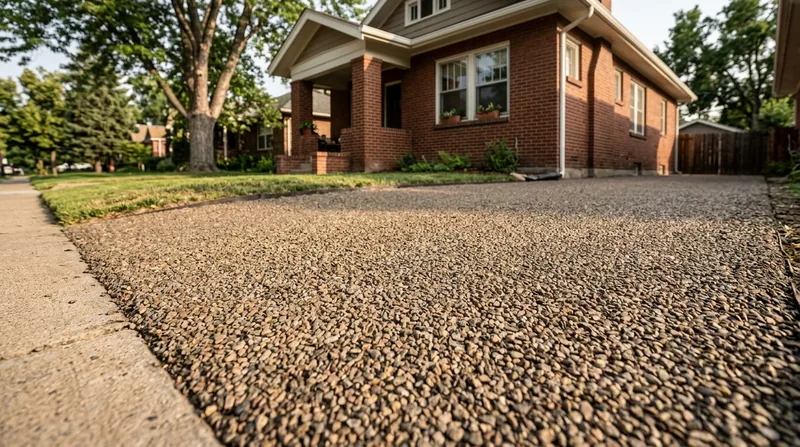




Tar and chip driveways in Denver offer older bungalow neighborhoods and modest ranch properties a textured surface that masks the seasonal cracking and heaving caused by Denver's expansive clay soils and repeated freeze-thaw cycles. The Denver metro sits on bentonite and montmorillonite weathered from volcanic ash, which swells when spring snowmelt arrives and shrinks as the Front Range dries out, moving the ground beneath any driveway regardless of the thermometer. Tar and chip, also called chip seal, seals the surface with liquid asphalt and stone chips, a lighter and less expensive option than full-depth hot mix asphalt replacement. The textured finish hides minor cracks and gives properties near Washington Park, Capitol Hill and the post-war ranch ring through Lakewood and Arvada a finished look without the cost of a complete tear-out. We help Denver homeowners decide whether tar and chip fits the job or whether asphalt resurfacing and overlay is the better choice for their driveway's condition.
Why Tar and Chip Works for Denver's Older Neighborhoods
Denver's grid neighborhoods and bungalow districts feature driveways poured decades ago with minimal setback from the sidewalk, and many of those surfaces now show the pattern of seasonal stress that defines this climate. The high elevation, intense ultraviolet exposure, and more than a hundred freeze-thaw crossings each year grey out and embrittle asphalt binder faster than at sea level. Tar and chip gives those older driveways a second life by sealing the existing surface and adding texture that conceals fine cracks before they widen into alligator patterns. The cost is lower than replacement, installation is faster, and the result works well on driveways that are not yet structurally failed but show surface wear.
- We apply liquid asphalt binder directly to the existing surface and immediately embed stone chips into it.
- The texture hides minor cracks and age-related discoloration that would otherwise show through fresh paint or sealant.
- Tar and chip does not require full excavation or base preparation, keeping labor and material costs down.
- The sealed surface sheds water and extends the life of the underlying asphalt before major structural failure occurs.
Tar and chip is most effective on driveways with a sound base and no major structural damage, and it works best in neighborhoods where the textured aesthetic fits the existing character.
Key info: In Capitol Hill and Park Hill neighborhoods, where narrow lots and historic bungalows line tight setbacks, tar and chip driveways offer a finished appearance that respects the lot's constraints and the street's visual character without the cost or disruption of full replacement.
The City and County of Denver has specific rules about driveway aprons, curb cuts and impervious surface limits. Always verify your local requirements with Denver's permit office before scheduling work, and confirm that tar and chip meets your HOA standards if you live in a master-planned community.
How We Install Tar and Chip Driveways in Denver
Tar and chip installation is a straightforward sequence that begins with a thorough surface preparation and ends with a compacted stone finish. We inspect the existing asphalt to confirm it has no major base failure, alligator cracking, or structural heave. If the surface is sound but aged and cracked, tar and chip is a viable choice. The process moves quickly compared to full-depth replacement, and the driveway is ready for light traffic within 24 to 48 hours.
- We clean and prepare the existing asphalt surface, removing loose debris and sweeping the area thoroughly.
- Liquid asphalt binder is applied evenly across the entire driveway using a spray distributor truck.
- Stone chips are immediately spread onto the wet binder and compacted with a heavy roller to embed them securely.
- We allow 24 to 48 hours for the binder to cure before the driveway is opened to light traffic.
- A second light application may be applied if the first pass shows thin spots or bare asphalt showing through.
The entire job typically completes in one to two days, depending on driveway size and weather conditions.
Example: A 500-square-foot driveway in Lakewood with minor surface cracking and no base failure takes one day to prepare, apply binder and chips, and compact. The homeowner keeps vehicles off the surface for two days while the binder cures, and the textured finish hides the age lines that were visible on the bare asphalt.
Tar and chip works well as a complement to gravel driveway installation and grading on rural properties or as a maintenance step before moving to full driveway replacement when the underlying base has failed.
Tar and Chip Methods: When Each Approach Makes Sense
| Approach | Description | Best for |
|---|---|---|
| Single-Coat Tar and Chip | One application of binder and chips, compacted and cured. Standard finish. | Driveways with light to moderate surface cracking and sound bases that need a quick refresh. |
| Double-Coat Tar and Chip | Two applications of binder and chips for a thicker, more durable finish and better coverage of bare spots. | Older driveways with extensive surface wear or high-traffic areas needing longer-lasting protection. |
| Tar and Chip with Edge Seal | Standard tar and chip plus a liquid asphalt seal applied to the perimeter and apron for water management. | Driveways where water runoff is a concern or where the apron meets the street and needs defined edges. |
| Recycled Asphalt Base with Tar and Chip | Existing surface is graded and compacted with recycled asphalt millings before tar and chip is applied for added base stability. | Driveways with minor base settling or soft spots that need reinforcement before sealing. |
Each method is priced on site based on driveway size, surface condition and the scope of preparation required. We assess the existing asphalt during the free estimate and recommend the approach that gives the best value for your property and budget.
Tar and Chip Driveways Cost in Denver: What to Expect
Tar and chip driveways in Denver typically start at $5 per square foot for a single-coat application on a driveway with minimal surface preparation. The final cost depends on the size of the driveway, the existing condition of the asphalt, and whether a second coat or edge sealing is needed. A typical residential driveway of 500 to 800 square feet ranges from $2,500 to $4,000 for a single-coat application, while a double-coat finish or a larger property may run $4,000 to $6,500. Additional factors that affect pricing include access for the equipment truck, the amount of debris removal required, and whether the apron or edges need special attention.
We always provide a written estimate that specifies the square footage, the number of coats, the tonnage of stone chips, and the total labor and material cost. Getting two or three estimates from local contractors helps you understand the market and ensures you are not comparing apples to oranges. Visit our pricing page for more detail on what moves costs up or down, and call us at (720) 674-7204 for a free on-site estimate with no obligation.
Tar and Chip Driveways Near Me: What Denver Homeowners Should Know When Hiring
Choosing the right contractor for tar and chip work means verifying that the company is fully insured, has a local address and local references, and provides a written contract before any work begins. Denver's permit requirements vary by neighborhood and HOA rules, so confirm with your local building department whether your project needs approval before scheduling. A reputable contractor will help you navigate those requirements and explain what the estimate covers and why the price is set the way it is.
Red flags in paving include unsolicited door-to-door offers, no written contract, a request for a large cash deposit upfront, out-of-state license plates, and a price that seems too good to be true. Always ask for references from recent work in your neighborhood, verify that the contractor carries current insurance, and request a detailed estimate that includes square footage, tonnage of materials and the scope of surface preparation. We have been in business since 2012, maintain a local shop in Denver, and provide a written estimate and tonnage specifications for every job.
If your driveway shows extensive alligator cracking, base heave or structural failure, tar and chip will not solve the problem. In those cases, asphalt resurfacing and overlay or full driveway repair is the honest recommendation. We assess the job on site and tell you whether tar and chip is the right choice or whether your driveway needs a different approach. Contact us for a free estimate and honest guidance on what your driveway actually needs.
Tar & Chip Driveways in Denver: Pricing Guide
| Service | Price | Details |
|---|---|---|
| Single-coat tar and chip | Starting at $5/sq ft | One application of binder and chips on a driveway with sound base and light to moderate surface cracking |
| Double-coat tar and chip | Starting at $7/sq ft | Two applications for thicker protection and better coverage on older or heavily worn driveways |
| Tar and chip with edge seal | Starting at $6/sq ft | Single coat plus liquid asphalt perimeter seal for water management and apron definition |
| Recycled asphalt base prep plus tar and chip | On estimate | Base grading and compaction with millings before sealing, required when minor settling or soft spots are present |
| Travel and estimate | Free | No charge for the on-site visit and written estimate, response within 24 hours at (720) 674-7204 |
Indicative pricing, the exact cost depends on square footage, finish, and site access. Free personalized estimate within 24h at (720) 674-7204.


