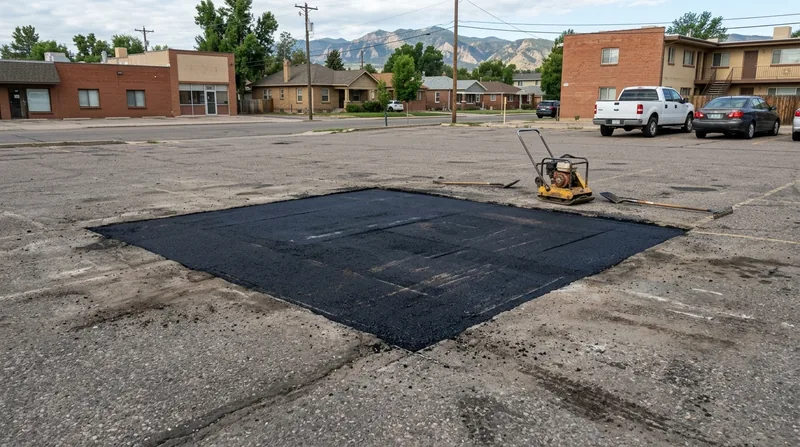




Denver parking lots sit on expansive clay that swells after spring snowmelt, cracking asphalt from underneath long before the surface shows wear. Parking lot repair and resurfacing in Denver means identifying whether the base has failed, the binder is breaking down, or both, and then deciding between patching, overlay, or full replacement. We saw-cut failed sections, rebuild the compacted base, and lay hot mix that matches your existing grade and drainage. The Front Range's hundred-plus freeze-thaw cycles a year and the ultraviolet load at a mile of elevation accelerate that process, so parking lots that hold for fifteen years on the coasts can need work in ten here. Getting ahead of alligator cracking and base heave is what keeps a parking lot usable and saves you from a complete tear-out.
Why Parking Lot Repair and Resurfacing Matters in Denver's Climate
Denver's expansive clay doesn't just sit still. Spring snowmelt saturates the soil, causing it to swell, and by mid-summer the Front Range dries out completely, leaving the clay to shrink back. That movement happens under your parking lot every year, and asphalt on top of a shallow or compromised base cracks first where the clay moves most. Add the freeze-thaw cycles (we see over a hundred a year), and those cracks become channels for water infiltration. Water gets under the base, the base weakens, and the surface starts to fail in patches. Once alligator cracking spreads across thirty to forty percent of the lot, patching becomes a waste of money because the base underneath is already gone.
- Expansive clay beneath parking lots swells with spring moisture and shrinks as the Front Range dries, cracking asphalt from below even when the surface looks intact.
- Freeze-thaw cycles, which occur over a hundred times per year in Denver, force water deeper into cracks and accelerate base failure.
- Ultraviolet exposure at a mile of elevation makes asphalt binder grey and brittle faster than it does at sea level, shortening the life of the wearing course.
- Alligator cracking across more than thirty to forty percent of the surface signals base failure, making spot repairs ineffective and full resurfacing or replacement the only sound choice.
Catching the problem early and choosing the right repair method is the difference between a five-thousand-dollar resurfacing and a twenty-thousand-dollar replacement.
Key info: Denver's parking lot failures follow a predictable pattern: spring cracks appear after snowmelt, summer drought shrinks the base, and fall freeze-thaw widens those cracks. By the following spring, water has infiltrated the base and surface failure accelerates. Waiting past the first visible cracking is the single most expensive mistake lot owners make. A parking lot in Lakewood or Thornton showing early cracking should be inspected for base condition within the same season.
For more detail on how base preparation affects long-term durability, see our parking lot paving and construction page, which covers the full installation process and base specs that prevent these problems from the start.
How We Repair and Resurface Parking Lots in Denver
Our process starts with a site assessment to determine whether the base is still sound or whether it has failed. If the cracking is limited to the surface and the base is firm, an overlay (new asphalt over the existing surface) can work. If the base is soft, heaving, or if alligator cracking covers more than a third of the lot, we recommend full-depth repair or resurfacing. We saw-cut the failed area to clean edges, remove the broken material, rebuild the base with compacted aggregate to the depth needed for your lot's use and local drainage requirements, and lay new hot mix that ties into your existing grade and slope.
- We assess the parking lot on site to measure crack patterns, probe the base, and determine whether repair, overlay, or full-depth work is needed.
- We saw-cut failed areas with clean, straight edges so new asphalt bonds properly and water cannot seep into the cut line.
- We remove broken asphalt and any soft or displaced base material, taking the excavation to the depth required by the lot's soil conditions and drainage design.
- We compact new aggregate base material in lifts, checking density with proof rolling to ensure it will support traffic and handle freeze-thaw movement.
- We lay hot mix asphalt at the proper temperature and thickness, matching the existing grade and pitch so water sheds correctly and the repair is invisible to traffic.
The entire process takes one to three days depending on lot size and repair scope, and the lot is ready for light traffic within twenty-four hours and full traffic within three to five days.
Real example: A strip mall parking lot in Westminster had cracking concentrated along the north edge where clay heave was worst. We saw-cut a twelve-by-sixty-foot section, removed the broken asphalt and two inches of soft base, replaced it with four inches of compacted recycled asphalt and new base, and laid two inches of hot mix. The repair held a full season and the lot owner chose to have us do the rest of the lot the following spring. That early action saved them from a complete tear-out.
For questions about how resurfacing compares to full replacement, see our page on asphalt resurfacing and overlay, which covers the decision tree in detail.
Parking Lot Repair Methods and When to Use Each
| Approach | Description | Best for |
|---|---|---|
| Pothole and crack patching | Saw-cut the failed area, clean it, and fill with new hot mix compacted to match the surrounding surface. | Isolated failures in a lot with a sound base. Works only if damage is under ten percent of total surface. |
| Asphalt overlay | Lay one and one-half to two inches of new hot mix over the existing surface after cleaning and any necessary pothole repair. | Parking lots with surface cracking but a firm, non-heaving base. Adds life without excavation or base work. |
| Full-depth repair | Saw-cut the failed section, remove all asphalt and compromised base, rebuild base to proper depth, and lay new asphalt. | Alligator cracking, heaving, or soft base. Solves the problem at the root instead of patching the symptom. |
| Mill and overlay | Remove the top one to two inches of asphalt with a milling machine, then lay new hot mix. Preserves the base if it is sound. | Parking lots with surface wear and minor cracking but no base failure. Removes old binder and replaces it without full excavation. |
The choice between these methods depends on the extent of damage, the condition of the base, and your budget. A parking lot showing early cracking might be a candidate for overlay. A lot with widespread alligator cracking or visible heave will need full-depth work to prevent the failure from spreading.
Parking Lot Repair and Resurfacing Cost in Denver: What to Expect
Parking lot repair and resurfacing costs in Denver start at around $650 to $800 for small pothole repairs and patches, and scale up depending on the area affected, the depth of base damage, and whether the lot requires milling or full-depth excavation. A small overlay (under five hundred square feet) typically runs $1,200 to $2,000. Full-depth repair of a larger section (one thousand to two thousand square feet) with base replacement can be $3,500 to $6,000. A complete mill-and-overlay of a two-thousand-square-foot lot runs $4,000 to $7,000. These figures assume standard access and no unusual site conditions.
Several factors move the price up or down. If the lot is tight and difficult to access with equipment, mobilization and setup cost more. If the base is deeper than expected or the soil is contaminated, excavation and disposal increase the bill. If the lot drains into a stormwater system that requires specific grading or if the work is near a building or utility, those constraints add time and care. A lot in downtown Denver with tight site lines will cost more than the same square footage in Littleton on a wide-open property.
The single most cost-effective move is catching the problem early. A lot that gets an overlay while the base is still sound costs a third of what a full tear-out and replacement costs two years later when the base has failed. We recommend getting two or three estimates from contractors who will actually inspect the base, not just look at the surface and quote a per-square-foot number.
See our full pricing page for more detail on what drives costs for different repair scopes, and call us at (720) 674-7204 for a free on-site estimate.
Parking Lot Repair and Resurfacing Near Me: What Denver Property Managers Should Know
Hiring a parking lot contractor in Denver means verifying that they understand the local soil and climate, that they carry insurance, and that they provide a written estimate with tonnage and thickness specs. Ask any contractor whether they have done similar work in the area and request references from properties you can visit. Ask them to specify the depth of the new base material and the thickness of the asphalt they will lay. A reputable contractor will put those numbers on the estimate. Avoid any contractor who quotes a price per square foot without seeing the site, who asks for a large cash deposit, or who pressures you to decide on the spot.
Many parking lots in Denver sit in master-planned communities or HOA-governed properties, and you may need architectural approval before work begins. Check your HOA rules or covenants. If your lot borders the public right-of-way or if the work involves a curb cut, apron, or drainage change, Denver may require a permit. Verify with the Denver Community Planning and Development office before you sign a contract. Colorado law also requires a utility locate (Colorado 811) before any excavation, and that is your contractor's responsibility, but confirm they will order it.
- Get a written estimate that includes the square footage being repaired, the depth of base material, the asphalt thickness, and the tonnage of material to be delivered and placed.
- Request references from at least two properties where the contractor has done similar work, and visit those sites if possible to see how the repair has held.
- Confirm that the contractor carries liability insurance and ask to see a certificate of insurance before work begins.
- Check your HOA covenants and architectural guidelines, because many Denver area lots require approval before paving work can start.
- Contact Denver Community Planning and Development or your local building department to determine whether a permit is required for your specific repair scope.
- Verify that your contractor will order a Colorado 811 utility locate before any excavation begins, as required by state law.
A local contractor who can show you work they have done in your neighborhood and who takes time to explain the repair method and the reason for it is your best insurance against costly mistakes.
Ready to get started? Contact us for a free estimate, or call (720) 674-7204. We serve Denver, Aurora, Lakewood, Thornton, Arvada, and all of the surrounding communities in the Denver metro area.
Parking Lot Repair & Resurfacing in Denver: Pricing Guide
| Service | Price | Details |
|---|---|---|
| Pothole and small crack repairs | Starting at $650 | Saw-cut and patching for isolated failures under 50 square feet, includes material and labor for one repair area |
| Asphalt overlay (under 500 sq ft) | Starting at $1,200 | New wearing course over sound base, includes surface prep and two inches of hot mix, price varies with lot accessibility |
| Full-depth repair section (1,000-2,000 sq ft) | Starting at $3,500 | Base excavation and replacement with new asphalt, cost depends on base depth and soil conditions discovered on site |
| Mill and overlay (2,000+ sq ft) | Starting at $4,000 | Milling removes top layer, new base and asphalt laid, price scales with lot size and depth of material to be recycled |
| Free site estimate | No charge | We inspect the base, measure the affected area, and provide a written quote with tonnage and thickness specs within 24 hours |
Indicative pricing, the exact cost depends on square footage, finish, and site access. Free personalized estimate within 24h at (720) 674-7204.


