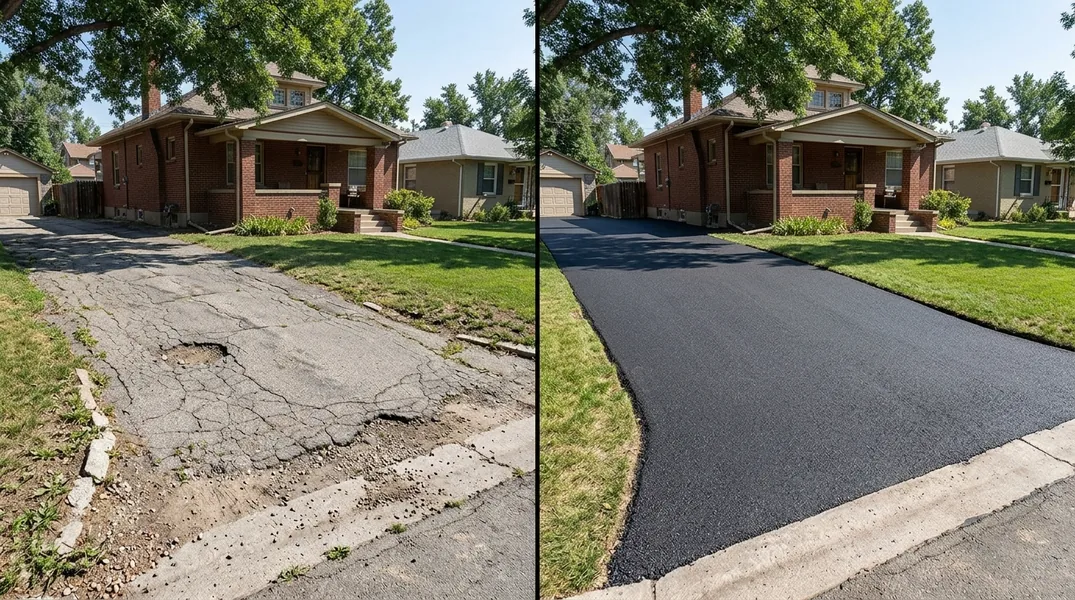
Understanding Denver's Unique Clay Soil Challenges
If you're a homeowner in Denver, you've likely noticed that the soil beneath your property behaves differently than in other parts of the country. The expansive clay soil common throughout the Denver area presents unique challenges for any driveway installation. Clay soil expands when it absorbs moisture and contracts when it dries out, creating constant movement beneath your driveway surface. This freeze-thaw cycle, combined with Denver's elevation and temperature fluctuations, puts significant stress on whatever material you choose for your driveway.
When evaluating an Asphalt Driveway Paving & Installation versus a concrete option, understanding how each material responds to clay soil movement is essential. Both materials have strengths and weaknesses when dealing with the specific soil conditions found in the Front Range region. The decision you make today will affect your driveway's durability, maintenance requirements, and long-term costs for years to come.
Asphalt vs Concrete Driveway: Performance in Clay Soil
When comparing Asphalt Driveway Paving & Installation to concrete, the clay soil factor becomes a critical consideration. Asphalt has a natural flexibility that allows it to move slightly with the ground beneath it. This flexibility is actually an advantage in areas with expansive clay soil, as the asphalt can accommodate minor shifts without cracking. The material's ability to flex means it won't develop the rigid fractures that often plague concrete in similar conditions. Additionally, asphalt's dark color helps it absorb heat, which can actually aid in the freeze-thaw cycle by promoting more gradual temperature transitions.
Concrete, by contrast, is a rigid material that cannot flex with soil movement. When clay soil expands and contracts beneath a concrete driveway, the concrete slab experiences stress that it cannot absorb. This typically results in cracking, heaving, and settling issues that become increasingly problematic over time. Homeowners in clay-heavy areas often find that concrete driveways develop spider web cracks and uneven surfaces within just five to ten years. While concrete initially appears more durable and low-maintenance, the specific soil conditions in the Denver area make it a less practical choice for most residential applications.
Asphalt Driveway Lifespan: What to Expect in Denver
The asphalt driveway lifespan in Denver typically ranges from 15 to 20 years with proper maintenance, and sometimes longer in favorable conditions. This timeline accounts for the challenging climate and soil conditions specific to the region. The key to achieving a longer lifespan is understanding that asphalt requires regular attention. Seal coating every two to three years protects the surface from UV damage and moisture penetration, both of which can significantly extend your driveway's life. Additionally, addressing small issues like cracks or minor damage promptly prevents them from developing into larger, more expensive problems.
Concrete driveways in Denver, while sometimes marketed as lasting 30 years or more, often show significant deterioration much sooner when installed over expansive clay soil. Many homeowners find themselves dealing with major repairs or complete replacement after just 10 to 15 years. When you factor in the cost of concrete repairs and the disruption of a complete replacement, asphalt becomes the more economical choice over the long term. If your current concrete driveway is failing, you might also consider asphalt over concrete driveway installation as a cost-effective alternative to removal and replacement.
Maintenance Requirements: Asphalt vs Concrete in Clay Soil
Asphalt requires more frequent maintenance than concrete, but the maintenance tasks are simpler and less expensive. Seal coating is the primary maintenance task, and it's a relatively affordable process that protects your investment. You'll also need to address small cracks and potholes as they appear. Pothole Repair & Asphalt Patching is straightforward and cost-effective when done promptly. Many homeowners also consider Asphalt Resurfacing & Overlay services when their driveway begins to show age but still has structural integrity. These maintenance approaches keep your asphalt driveway in good condition and extend its useful life significantly.
Concrete maintenance might seem simpler at first glance, but in Denver's clay soil environment, the problems that develop often require expensive solutions. Uneven settling caused by soil movement can create trip hazards and water drainage problems. Cracked concrete allows water to penetrate and freeze beneath the surface, accelerating deterioration. While you can seal concrete, it doesn't address the underlying movement issues caused by expansive clay. Many homeowners find that concrete repair costs accumulate quickly, making the total cost of ownership much higher than initially expected. When you consider the full lifecycle costs, asphalt becomes the more practical choice for Denver properties.
Asphalt Driveway Paving & Installation Cost in Denver: What to Budget
Understanding the pricing for Asphalt Driveway Paving & Installation helps you make an informed decision about your driveway investment. In Denver, asphalt driveway installation typically costs between $3 and $6 per square foot, depending on the complexity of the project, site conditions, and current material costs. For a standard 500-square-foot driveway, you can expect to invest between $1,500 and $3,000 for professional installation. Concrete driveways generally cost more upfront, ranging from $6 to $12 per square foot, but this higher initial cost often leads to higher total costs over the driveway's lifetime due to repairs and replacement needs.
When budgeting for your driveway project, don't forget to factor in long-term maintenance costs. Seal coating costs approximately $0.10 to $0.25 per square foot and should be done every two to three years. Over a 20-year period, these maintenance costs are significantly less than the repair and replacement costs typically associated with concrete driveways in clay soil environments. Denver Asphalt Paving offers competitive pricing for both new installations and maintenance services. To get a specific quote for your property and understand the exact costs involved, we encourage you to contact us at (720) 674-7204 or request a free estimate online.
Making Your Decision: Which Driveway Material is Right for You
After considering the specific challenges of Denver's clay soil, asphalt emerges as the superior choice for most residential properties in the area. The material's flexibility accommodates soil movement, its maintenance is straightforward and affordable, and its lifecycle costs are significantly lower than concrete when you account for repairs and eventual replacement. If you have an existing concrete driveway that's showing signs of distress, you don't necessarily need to remove it entirely. Asphalt over concrete driveway installation is a viable option that can extend your driveway's life and improve its performance in Denver's challenging soil conditions.
The best way to determine the right solution for your specific property is to have a professional assessment. Different properties have different drainage patterns, soil compositions, and usage requirements. Denver Asphalt Paving has years of experience working with Denver-area properties and understands the unique challenges posed by expansive clay soil. Our team can evaluate your current situation, discuss your options, and recommend the most cost-effective solution for your needs. Contact us today at (720) 674-7204 or visit our website to request a free estimate and start your journey toward a durable, reliable driveway.
Looking for a professional asphalt paving contractor in Denver? Denver Asphalt Paving responds fast for all your asphalt paving needs.
Get a Free Quote