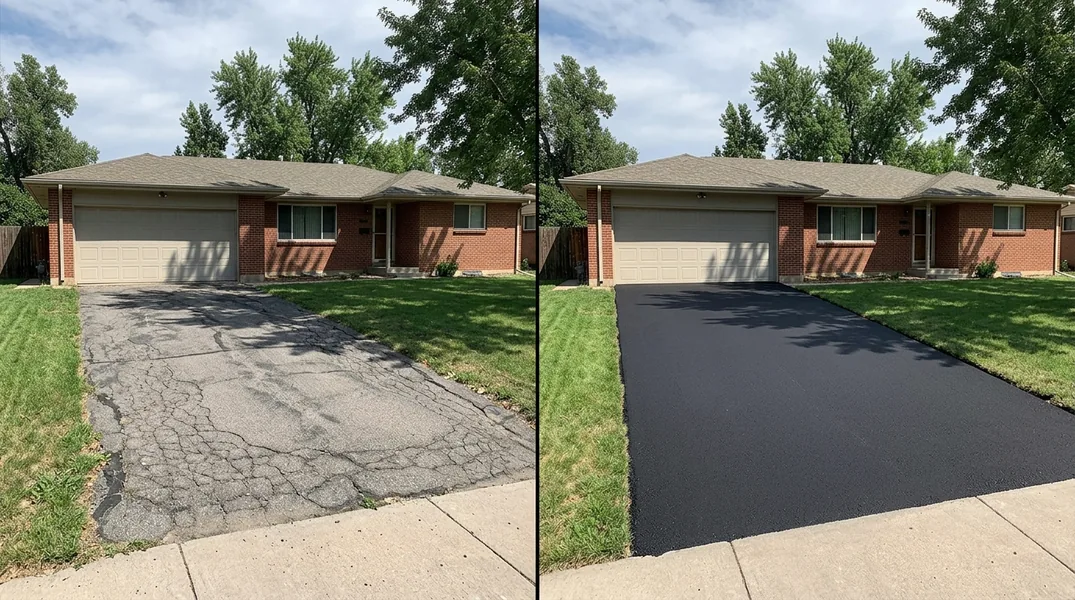
Signs Your Driveway Needs Repair vs. Replacement
One of the most common questions homeowners in Denver ask is whether their aging driveway can be fixed with repairs or if it's time for a complete replacement. The answer depends on several factors, including the extent of the damage, the age of the asphalt, and your long-term plans for your property.
If your driveway shows minor cracks, small potholes, or surface wear, Driveway Repair is often the most cost-effective solution. Surface-level damage can typically be addressed through targeted patching or crack filling, which extends your driveway's lifespan by several years. However, if you notice widespread cracking patterns (often called alligatoring), significant settling, or multiple large potholes across different areas, your driveway may be beyond economical repair. In these cases, Asphalt Driveway Paving & Installation or Asphalt Resurfacing & Overlay becomes the smarter investment.
How Long for Asphalt to Cure: What You Need to Know
Understanding how long for asphalt to cure is essential if you're planning new paving work. Many homeowners are surprised to learn that fresh asphalt isn't fully hardened the moment the paving crew leaves your property. The curing process is gradual and depends on weather conditions, temperature, and the specific asphalt mix used by your contractor.
Typically, asphalt reaches its initial set within 24 to 48 hours, meaning the surface hardens enough to walk on lightly. However, the material continues to cure and strengthen for several weeks after installation. During this curing period, the oils in the asphalt continue to evaporate, and the binder bonds fully with the aggregate. In Denver's climate, where temperatures can fluctuate significantly between seasons, curing times may vary. Cooler weather slows the process, while warmer conditions accelerate it. Full structural curing typically takes 6 to 12 months, though you can resume normal use much sooner.
How Long Before You Can Drive on New Asphalt
If you've just had new asphalt installed, you're probably eager to use your driveway again. The good news is that you won't have to wait months, but patience during the first few days is critical. How long before you can drive on new asphalt depends on several conditions, including air temperature, ground temperature, and the thickness of the application.
In ideal conditions with temperatures above 50 degrees Fahrenheit, you can typically drive on new asphalt after 24 to 48 hours. However, this assumes light driving only (regular passenger vehicles). Heavy vehicles, trucks, or RVs should wait longer to avoid leaving tire marks or causing indentations in the still-softening surface. If temperatures drop below 50 degrees during or immediately after installation, extend your waiting period to 48 to 72 hours. Your paving contractor should provide specific guidance based on the weather conditions at the time of your project. It's always better to err on the side of caution, as driving on asphalt before it's adequately cured can compromise the integrity of your new driveway and void your warranty.
New Asphalt Driveway Care: Protecting Your Investment
Once your new asphalt is ready for use, proper maintenance becomes your responsibility as a homeowner. New asphalt driveway care isn't complicated, but it does require attention to detail and a proactive mindset. The first few months after installation are particularly important because your driveway is still settling and curing, making it more vulnerable to damage from heavy loads, extreme weather, and improper maintenance.
During the first month, avoid parking heavy vehicles in the same spot repeatedly, and try to distribute weight evenly across the surface. Clean your driveway regularly with a broom or light pressure wash to remove debris and prevent dirt accumulation, which can trap moisture and lead to deterioration. Avoid using harsh chemicals or salt-based de-icers during the first winter, as these can damage the new asphalt surface. Instead, use sand or kitty litter for traction. Additionally, watch for small cracks that may develop and have them sealed promptly. These simple steps during the critical early months will significantly extend the life of your driveway and protect your investment for years to come.
How Often to Seal Driveway: A Maintenance Schedule for Denver Homeowners
One of the most frequently asked questions about driveway maintenance is how often to seal driveway surfaces. Sealcoating is one of the most cost-effective ways to protect your asphalt investment and extend its lifespan by years. The frequency of sealcoating depends on your driveway's age, your local climate, and how much traffic it receives.
For new asphalt, most experts recommend waiting 6 to 12 months before applying the first sealcoat. This allows the asphalt to cure fully and any excess oils to evaporate. After that initial application, you should sealcoat your driveway every 2 to 3 years, or more frequently if your driveway experiences heavy use or harsh weather conditions. Denver's high elevation, intense UV rays, and freeze-thaw cycles make regular sealcoating especially important for homeowners in the area. Sealcoating protects against UV damage, water infiltration, and oxidation, all of which can significantly shorten your driveway's lifespan. The cost of sealcoating is modest compared to the expense of major repairs or replacement, making it an excellent preventive maintenance strategy. If you're unsure about your driveway's condition or sealcoating schedule, the team at Denver Asphalt Paving can assess your property and recommend the best maintenance plan.
When to Call a Professional: Asphalt Driveway Paving & Installation Near Me
Knowing when to tackle a driveway problem yourself and when to call professionals is an important skill for any homeowner. While minor cleaning and surface maintenance can be DIY tasks, issues like Pothole Repair & Asphalt Patching, extensive cracking, or decisions about full replacement require professional expertise. Attempting major repairs without proper equipment, materials, and experience often leads to subpar results that don't last and may cost more in the long run.
If you're in Denver and notice significant damage to your driveway, reach out to Denver Asphalt Paving for a professional assessment. Our team can evaluate whether your driveway needs targeted repairs, resurfacing, or full replacement based on its condition and your budget. We'll also discuss pricing options and help you understand the long-term value of each solution. Call us at (720) 674-7204 or request a free estimate today. With professional guidance, you can make an informed decision that maximizes your driveway's lifespan and keeps your property looking great.
Looking for a professional asphalt paving contractor in Denver? Denver Asphalt Paving responds fast for all your asphalt paving needs.
Get a Free Quote